

Getting your tractor ready for autumn sowing: why the right tires matter
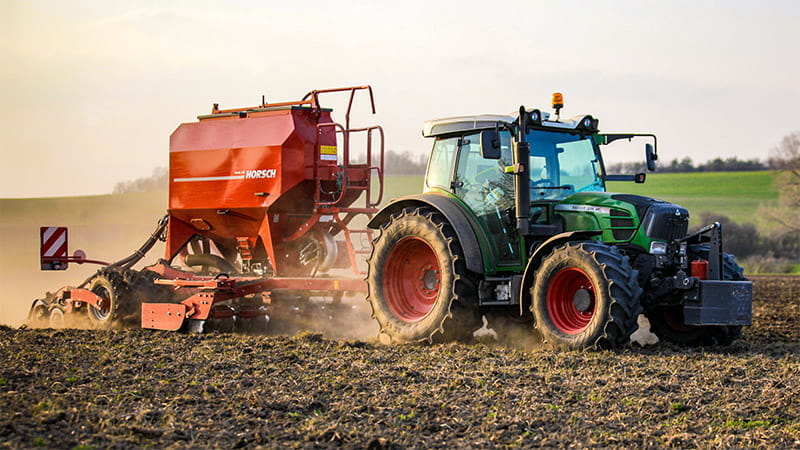
Early autumn changes the rhythm of the farm. Harvest equipment is being washed down and put away, cereal stubble is ready for cultivation, and the seed drill comes back out of the shed for winter wheat, barley, rapeseed, and cover crops. In much of Europe the maize and sugar beet campaigns are still running, so the same tractors move between late harvest work and the first drilling passes within the same week.
Those tractors have just carried months of harvest loads across yards, roads, and fields. Now they move into cooler and often wetter conditions, where seed placement is less forgiving and the margin for error is smaller. The question at this point is not whether the tires made it through the peak season. It is whether they are still the right tires for the work that comes next.
Why autumn raises the stakes
Autumn sowing typically means preparing and drilling seedbeds for winter wheat, barley, rapeseed, or cover crops into soils that are moving back toward field capacity after long summer months. Even though the tractor may still move through the field without trouble, field access is not the same as field condition, and the wrong tire setup can leave a mark long after the tractor has passed.
After a dry summer, that risk rises quickly once moisture returns. Soil that looked firm during harvest can become more vulnerable to deformation under load, especially where shrinkage and cracking have already changed the structure below the surface. The crop that follows must sit in that structure all winter, which is why the tire decision during autumn is less about surviving one more season and more about matching the tire to the work ahead.
Check the tire before the sowing window opens
Structural safety comes first. Harvest stubble, field residues, and road transfers can leave damage that does not cause immediate failure but weakens the casing slowly, and that weakness tends to surface later, once the tire is flexing for hours under the drawbar load of a drill or cultivator combination. We look at what is inside that casing, and why it matters, in how tire casings affect performance.
Tread wear carries a different kind of risk. A tractor tire does not need to be bald to stop being right for autumn sowing. As lugs round off, traction and self-cleaning performance fall away in damp soil, and the result shows up as more slip and a less stable pull exactly when steady traction matters most. Both checks take minutes, and both are worth making before the sowing window opens rather than during it. Our article to agricultural tire wear covers what to look for and when to act.
Protect the seedbed where traffic is hardest
A field does not compact evenly. The most affected parts are in predictable spots: headlands, turning areas, access points, and tramlines where the same tire tracks return again and again. That matters even more after rain, when a turning tractor and drill combination can damage the most heavily trafficked parts of the field in a single pass.
Axle loads and repeated passes are the fastest way to build soil compaction. Tire pressure and soil moisture also matter, but even correct pressure cannot offset excessive axle loads or repeated travel on the same wet track. Autumn tire choices should therefore fit the wider field strategy.
When conditions are critical, reduce unnecessary movements. Avoid repeat passes simply because the tractor is already in the field. Keep road-pressure settings for road work and use the appropriate field setting once the tractor is back on the soil. Small decisions at the headland can help protect the part of the field that is most likely to receive damage.
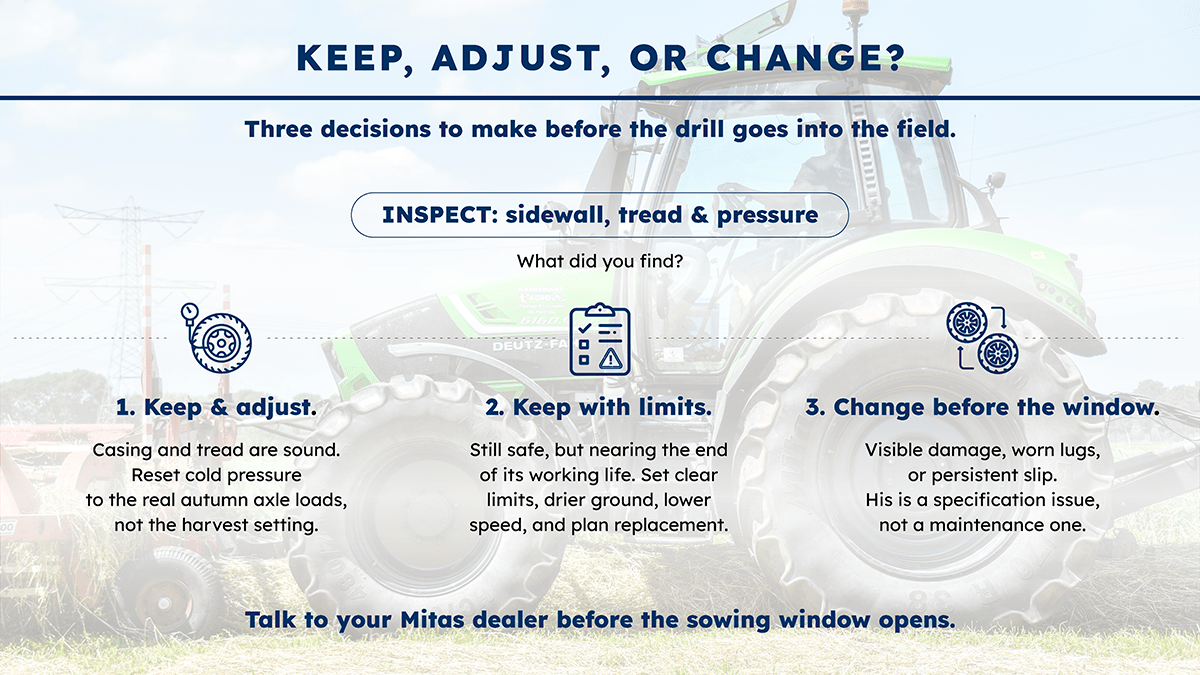
Keep, adjust, or change? Make the call before autumn sowing
Before the drill goes into the field, decide which of these three situations applies.
Keep and adjust. The casing and sidewalls are sound, the tread still suits the work, and the tractor holds acceptable traction with the planned implement. Check cold pressure against the actual autumn axle loads, then reset the tire for field conditions within the manufacturer's approved load-inflation guidance. Read more on how to choose the right tire pressure.
Keep with clear limits. The tire remains safe but is approaching the end of its useful working life, or it performs adequately only in drier conditions, at reduced speed, or with a lighter implement. Define those limits before the season begins and plan replacement before the next major drilling campaign.
Change before the window opens. Visible structural damage, substantially worn lugs, persistent wheel slip, or a new and heavier drill combination point to a specification issue rather than a maintenance issue. In that case the question is no longer how long the tire can be kept in service. It is what tire size, load capacity, construction, and pressure capability the tractor needs for the work now planned.
Make tires part of the autumn plan
This is the moment to make the tractor tire decision, not when the drill is already waiting at the field edge. It is far easier to choose the right tire before the sowing window opens than to manage a limitation when the crop needs to be in the ground.
Talk to your MITAS dealer to review the right tire choice and pressure setup for the work ahead.